Experience the breathtaking Hoa Binh Hydroelectric Reservoir with scenic cruises, island escapes, and local culture, all within easy reach of Mai Chau Hideaway.
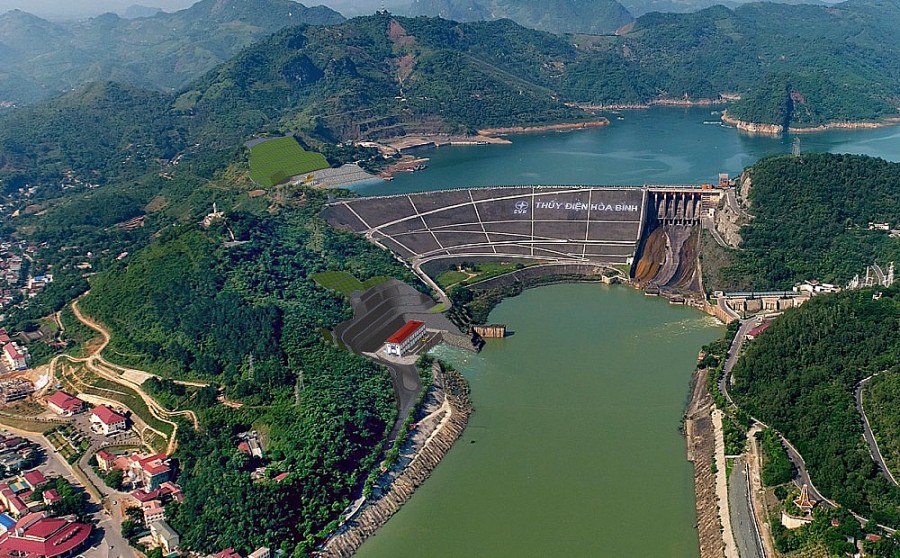
Overview of Hoa Binh Hydroelectric Reservoir (Source: Collected)
Most travelers only see Hoa Binh Reservoir from a highway viewpoint or a passing boat. You get to wake up inside it, on a peninsula surrounded by water on almost every side. This guide explains what the reservoir actually is, why your resort's location here is genuinely rare, and how to make the most of the days you have on its shores.
What Makes Hoa Binh Reservoir So Special
Hoa Binh Reservoir is not just a lake behind a dam -it is one of the largest man-made bodies of water in Southeast Asia, stretching roughly 70 kilometers through the mountains of northwestern Vietnam. The water is deep, calm, and constantly changing color depending on the season and the light, from pale jade in the dry months to a deeper emerald green after the rains. Because the reservoir winds through steep limestone and forested hills, almost every angle of it looks like a different lake entirely, which is part of why photographers and drone pilots keep coming back.
What makes your stay different from almost every other traveler's experience here is simple geography. Many hotels in the area advertise a "lake view" or a "near the lake" location, but they sit on the shore looking outward. Mai Chau Hideaway Lake Resort is built directly on a peninsula that extends into the reservoir itself, so the water surrounds the property rather than sitting beside it. Independent travel sources covering the Hoa Binh area have repeatedly pointed out that this is the only resort actually situated inside the lake rather than along its edge, which is a meaningful distinction if you care about waking up to water on more than one side of your room.
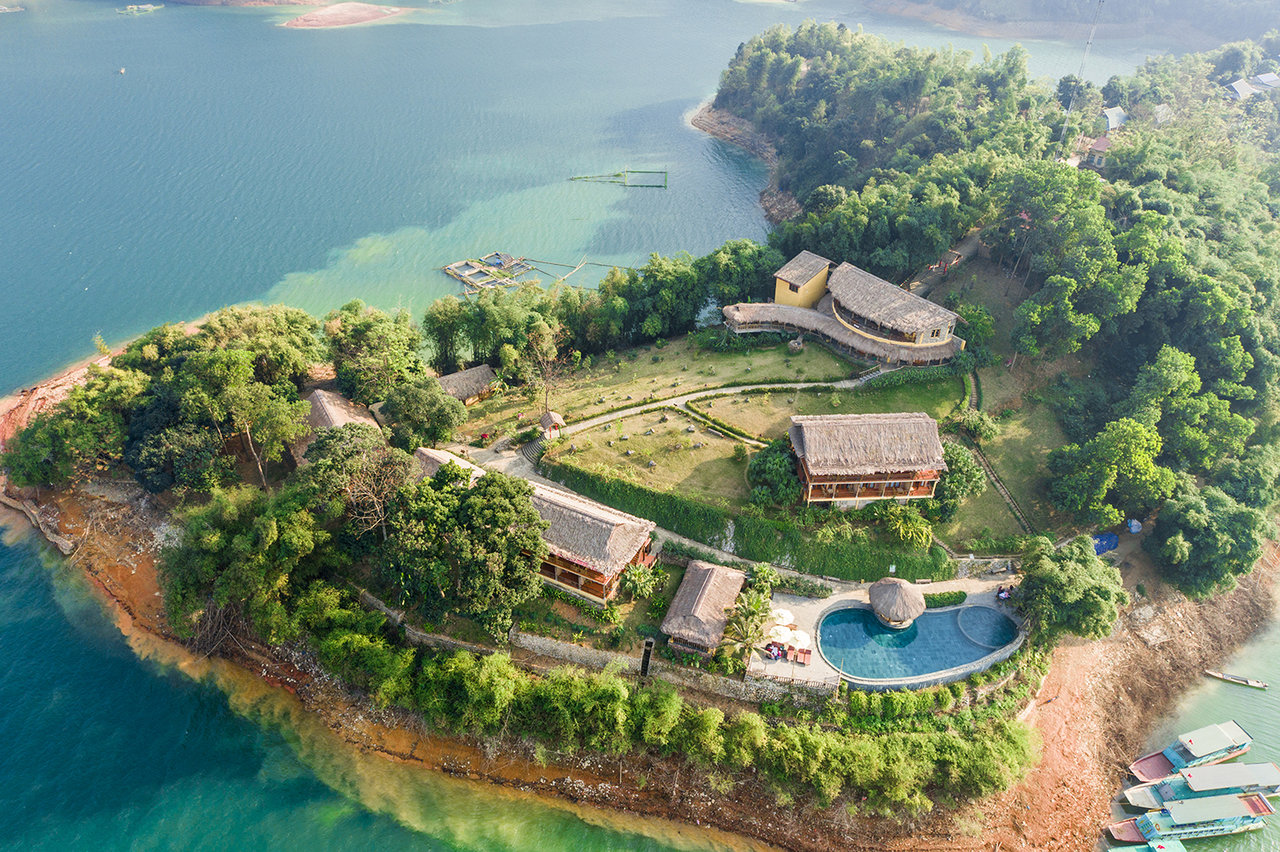
A view of Mai Chau Hideaway Lake Resorts
That geography is not a marketing slogan -it is a physical fact you can verify from almost any point on the property. Walk from your room to the restaurant, to the pool, or to the reception lounge, and the reservoir is visible the entire time, often from multiple directions at once. For travelers who have stayed at "lake view" resorts elsewhere and found the view limited to one window, this is a noticeably different kind of experience, and it is worth building your itinerary around rather than treating as a backdrop.
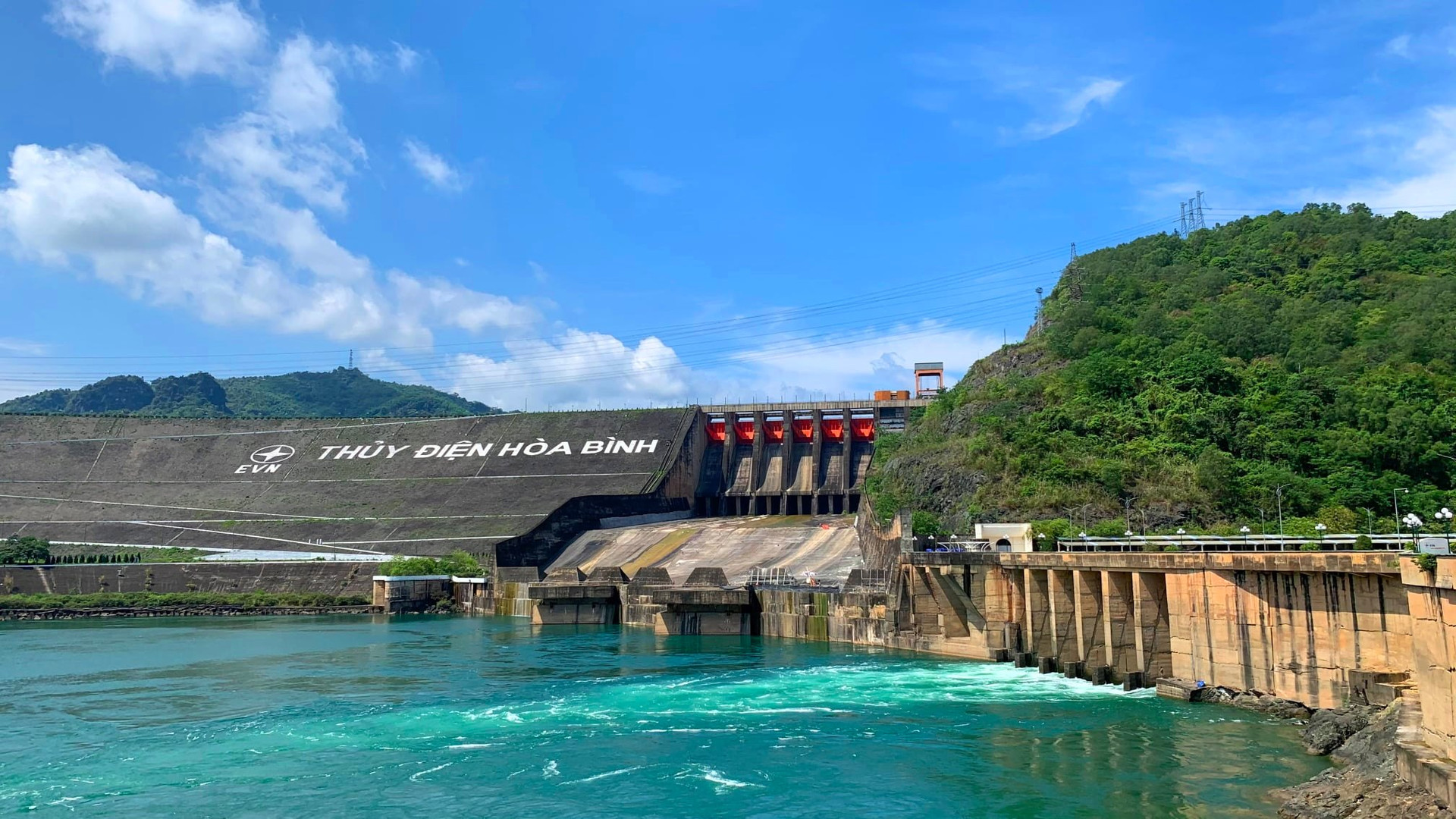
Hoa Binh Hydroelectric Reservoir has many special things (Source: Collected)
Sunrise, Boat Rides, and the Best Ways to Experience the Reservoir
The single most-recommended activity among guests staying near Hoa Binh Reservoir is watching sunrise directly from the water's edge, and this is even easier when your resort sits inside the lake itself. Mist typically settles over the water in the early morning between roughly 5:30 and 7:00 AM, especially from October through March, creating layers of fog that slowly burn off as the sun rises over the surrounding hills. Many guests describe this as more atmospheric than the sunrise views at coastal destinations in Vietnam, simply because the mountains and mist add a sense of depth that open sea views don't have.
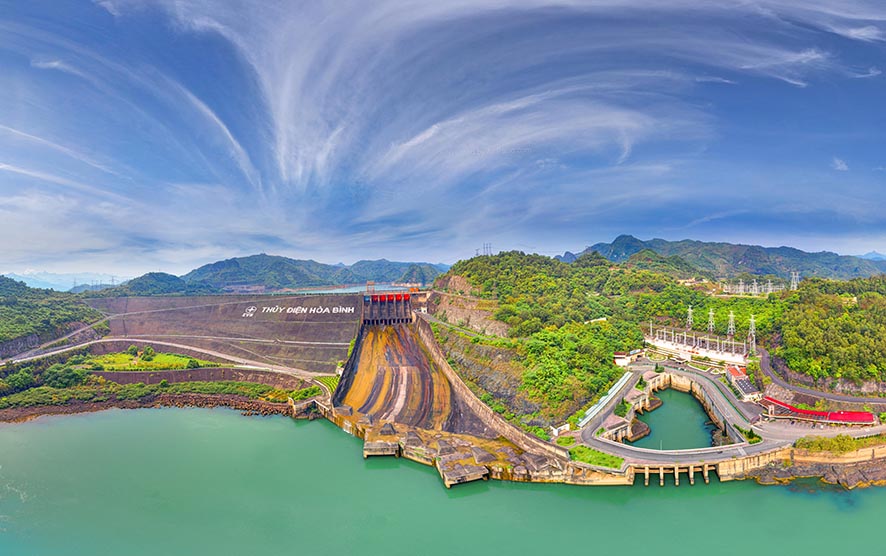
What is the best time to go to see Hoa Binh Hydroelectric Reservoir? (Source: Collected)
Boat trips are the second most popular way to explore, and they range from short one-hour rides around the nearer bays to half-day excursions that pass small floating fishing villages and fish farms anchored along the reservoir. Local boatmen can typically be arranged through the resort with advance notice, and a mid-morning or late-afternoon departure avoids both the midday heat and the fog of early morning, giving you clearer light for photos. Longer routes can take you toward quieter coves where you'll see very few other tourists, which is a genuine advantage of staying in this less-commercialized stretch of the lake compared to more crowded reservoir tourism spots closer to Hanoi.
For travelers who prefer to stay closer to the resort itself, the property's own natural-stone infinity pool sits right at the edge of the reservoir, positioned so that the pool's water line appears to merge visually with the lake beyond it. This "water meeting water" effect is one of the more photogenic details of the property and gives you a way to enjoy the reservoir's atmosphere without needing to book a separate excursion. Early morning or just before sunset are the best windows to swim here, both for the light and for the noticeably cooler temperatures.
The Engineering Story Behind Hoa Binh Dam and Reservoir

History of Hoa Binh Hydroelectric Reservoir (Source: Collected)
Understanding a little of the reservoir's history adds real context to what you're looking at from your window. Hoa Binh Reservoir was created by the construction of the Hoa Binh Hydroelectric Dam on the Da River, a project built between the late 1970s and late 1980s with Soviet engineering assistance, and for many years it stood as the largest hydroelectric facility in Southeast Asia. The dam was built to control seasonal flooding on the Red River delta downstream, generate electricity for northern Vietnam, and support irrigation across the region -a combination of purposes that shaped how the surrounding land and communities developed afterward.
Filling the reservoir required relocating a significant number of ethnic minority communities from the river valley to higher ground, which is part of why the hills around the lake today are home to a mix of Thai, Muong, Dao, and Mong villages living close to the water. This resettlement history is not hidden or particularly dramatic in how it's presented locally, but it explains why the cultural fabric around the reservoir feels so distinct from the water itself -the communities you'll meet on a boat trip or village visit are literally living alongside a landscape reshaped within the last two generations.
Today the dam remains a functioning piece of national infrastructure, and on certain days when water is released for power generation, you may notice a visibly stronger current near the dam area further downstream, though this has little effect on the calmer central sections of the lake where most resorts, including Mai Chau Hideaway, are located. Knowing this backstory is a small but genuine way to appreciate the reservoir as more than scenery -it's a working piece of Vietnam's modern history, and the calm water you're swimming in has a very deliberate engineering purpose behind it.
Meeting the Ethnic Communities Around the Lake -Without Leaving the Resort
One of the more distinctive choices Mai Chau Hideaway has made is organizing cultural experiences on-site rather than simply pointing guests toward outside tour operators, and this matters more than it might first appear. The resort's five room clusters are named after the five main ethnic groups of the northwest -Thai, Muong, Dao, Mong, and a general Tay Bac ("Northwest") zone -a naming structure that few other properties in the region use so deliberately. It's a small detail, but it signals that the cultural identity of the area is built into the resort's design rather than treated as an optional add-on.
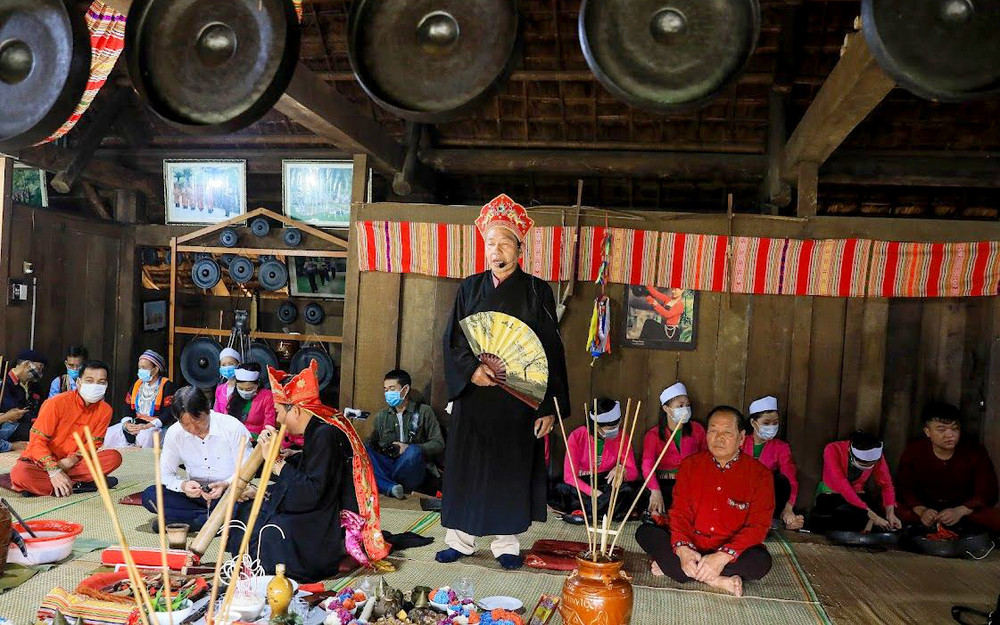
Some moments of Muong Village (Source: Collected)
That same commitment carries through to the resort's programming. Traditional performances from Thai, Muong, and Dao communities are staged directly on the property, including the Thai "Flower Dance" (Mua xoe hoa), which is listed as a regular entertainment offering rather than a rare special event. A complimentary cooking class focused on authentic Mai Chau dishes is also offered on-site, giving guests a hands-on introduction to the region's food traditions without needing to arrange transport elsewhere. For travelers with limited time, this on-property access to real cultural experiences is a meaningful convenience compared to resorts where "cultural tours" mean a bus ride to somewhere else entirely.
If you do want to venture further, the reservoir itself is dotted with small ethnic villages accessible mainly by boat, and combining a short lake excursion with a visit to one of these communities is a natural extension of what you'll already experience at the resort. Many guests find that having the on-site cultural introduction first -the dance performance, the cooking class -makes a village visit afterward feel more meaningful, since you arrive with some context rather than seeing it as an isolated tourist stop.

A traditional Thai Flower Dance performance (Source: Collected)
Northwestern Flavors at Bamboo Restaurant: What to Order
Food is one of the more underrated reasons travelers extend their stay near Hoa Binh Reservoir, and Bamboo Restaurant at Mai Chau Hideaway Lake Resort is built specifically around northwestern Vietnamese cuisine rather than a generic international menu. The signature dish worth prioritizing is beef in forest mushroom and mac khen sauce -mac khen being a wild Northwest Vietnamese pepper with a citrusy, slightly numbing flavor that's difficult to find outside this region. Pairing it with the Northwest-style papaya salad, which uses a noticeably different dressing and herb mix than the papaya salads found in central or southern Vietnam, gives you a genuinely regional meal rather than a tourist-adapted version of national dishes.
.jpg "Bamboo Restaurant at Mai Chau Hideaway")
Bamboo Restaurant at Mai Chau Hideaway
The restaurant itself is also visually distinctive, built around a spiral bamboo staircase near the reception and dining area that has become something of a recognizable feature of the property. Combined with warm wood tones and soft ambient lighting, it's the kind of detail that photographs well and gives the space a specific identity rather than a generic "rustic lodge" feel. If you're taking photos to remember the trip, this staircase area at golden hour or in the evening is worth a stop before or after your meal.
Beyond the two signature dishes, the kitchen draws on other Northwest staples throughout the week, so it's worth asking your server what's fresh or seasonal rather than defaulting to a printed menu alone -many of the best regional ingredients here are foraged or farmed locally and vary by week. Reservations for dinner seating near sunset are recommended if you want a table with a direct reservoir view, since this is understandably the most requested time slot.
Rest and Recovery: Wellness With a Mountain Character
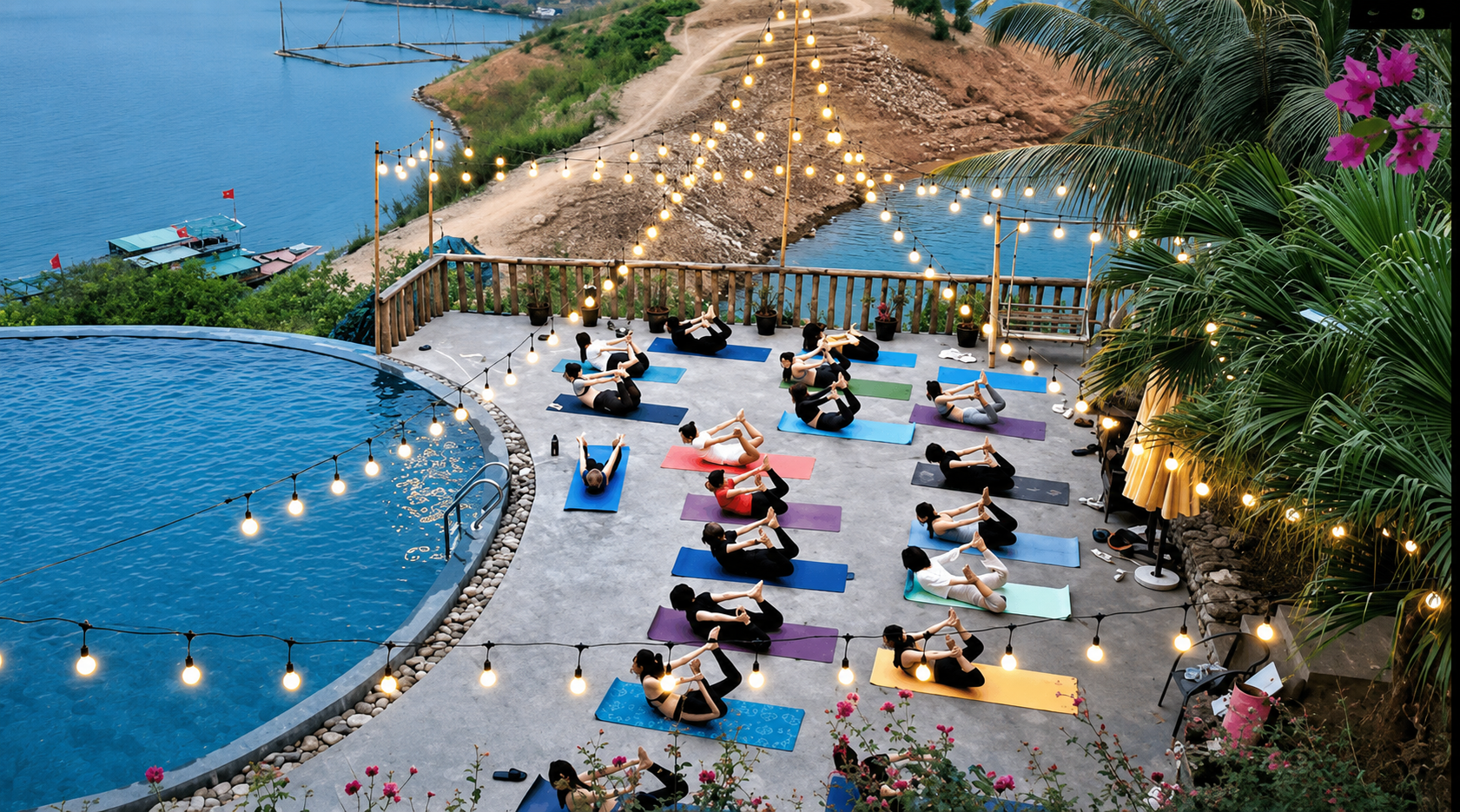
Doing yoga at Mai Chau Hideaway Lake Resort
Wellness offerings around Hoa Binh Reservoir tend to follow a generic "spa by the lake" template, but Mai Chau Hideaway Lake Resort's approach leans more specifically into regional mountain traditions. The signature experience is a traditional herbal foot soak using local medicinal leaves, a practice rooted in northwestern Vietnamese folk medicine rather than an imported spa concept, and it pairs naturally with the cooler mountain evenings here. Outdoor yoga sessions set against the reservoir and surrounding hills are offered as well, typically scheduled for early morning when the water is calmest and the light is softest.
For a fuller treatment, M'Spa at the resort offers a package called "Complete Tranquility Amid the Mountains," which combines massage and body treatments designed around the same regional ingredients and pacing as the rest of the property's wellness offerings. This isn't a one-size-fits-all spa menu borrowed from a coastal resort template -the treatments are framed specifically around the mountain and lake setting, which is consistent with how the rest of the resort is designed.
If you're planning a wellness-focused day, pairing an early yoga session with a late-afternoon herbal foot soak gives you a natural rhythm that works well with the reservoir's own daily changes in light and mist. Many guests find that scheduling these sessions around sunrise and sunset, rather than midday, makes the biggest difference in how restorative they feel, since the temperature and light are both more comfortable during those hours.
Practical Travel Tips: Getting Here, Best Time to Visit, and Nearby Destinations
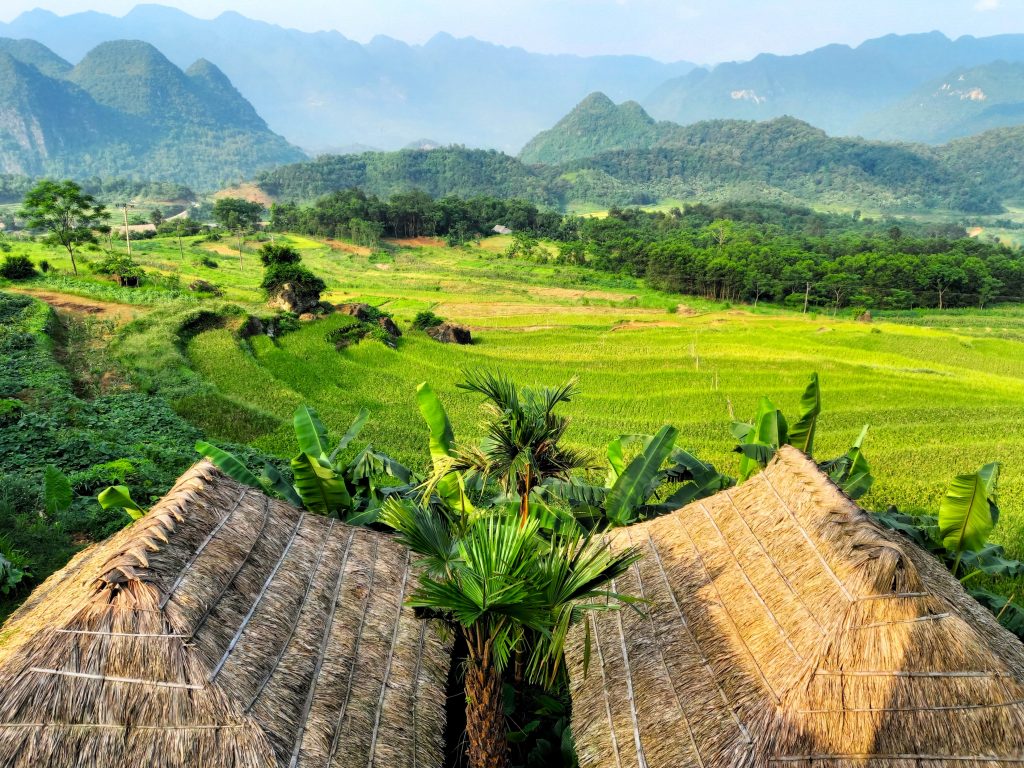
Mai Chau Hideaway Lake Resort's location on the reservoir, and nearby points of interest like Pu Luong and Thac Ba (Source: Collected)
Mai Chau Hideaway Lake Resort sits roughly 140 kilometers from Hanoi and about 18 kilometers from Mai Chau town, which typically translates to a drive of three to four hours from the capital depending on traffic and road conditions. Most international travelers arrange a private car or resort transfer directly from Hanoi, since public transport options to this specific stretch of the reservoir are limited and less predictable for first-time visitors. If you're combining this trip with other stops in the region, building in a buffer of an extra hour is a reasonable precaution given the winding mountain roads.
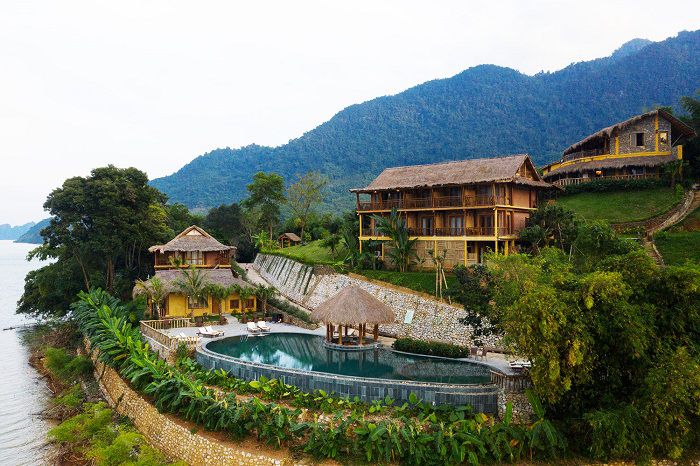
Mai Chau Hideaway Lake Resort
Weather-wise, the dry season from October to April generally offers the clearest skies and the most reliable misty sunrises, while the wetter months from May to September bring lusher green scenery but a higher chance of rain and reduced visibility on the water. Temperatures at this elevation are noticeably cooler than Hanoi year-round, so evenings can feel chilly even in summer, and it's worth packing a light jacket regardless of season.
The reservoir's location also makes it a convenient base for exploring nearby destinations that most travelers bundle into the same trip. Pu Luong Nature Reserve, Go Lao Waterfall, and Thac Ba Lake are all within reach for day trips, and many guests choose to split a longer itinerary between the calm of the resort and one or two active excursions to these spots. If you're researching how this area connects to the wider northwestern Vietnam travel circuit, it's worth reading further into how Hoa Binh Reservoir fits alongside these destinations before finalizing your route.
Frequently Asked Questions
Is Hoa Binh Reservoir the same as Hoa Binh Lake?
→ Yes, "Hoa Binh Lake" and "Hoa Binh Reservoir" refer to the same body of water, created by the Hoa Binh hydroelectric dam on the Da River. Locally you may hear it called either name.
Can I swim in Hoa Binh Reservoir directly?
→ Swimming conditions vary by location and season, and currents can be stronger near the dam itself. The resort's stone infinity pool, positioned at the lake's edge, offers a safer and more controlled way to enjoy the water's proximity.
How many days should I spend at the reservoir?
→ Most travelers find two to three nights enough to experience a sunrise, a boat excursion, one cultural activity, and at least one wellness session without feeling rushed.
Is the resort accessible without a private car?
→ A private transfer or car hire from Hanoi is strongly recommended, as public transport connections to this exact part of the reservoir are limited for international visitors.